
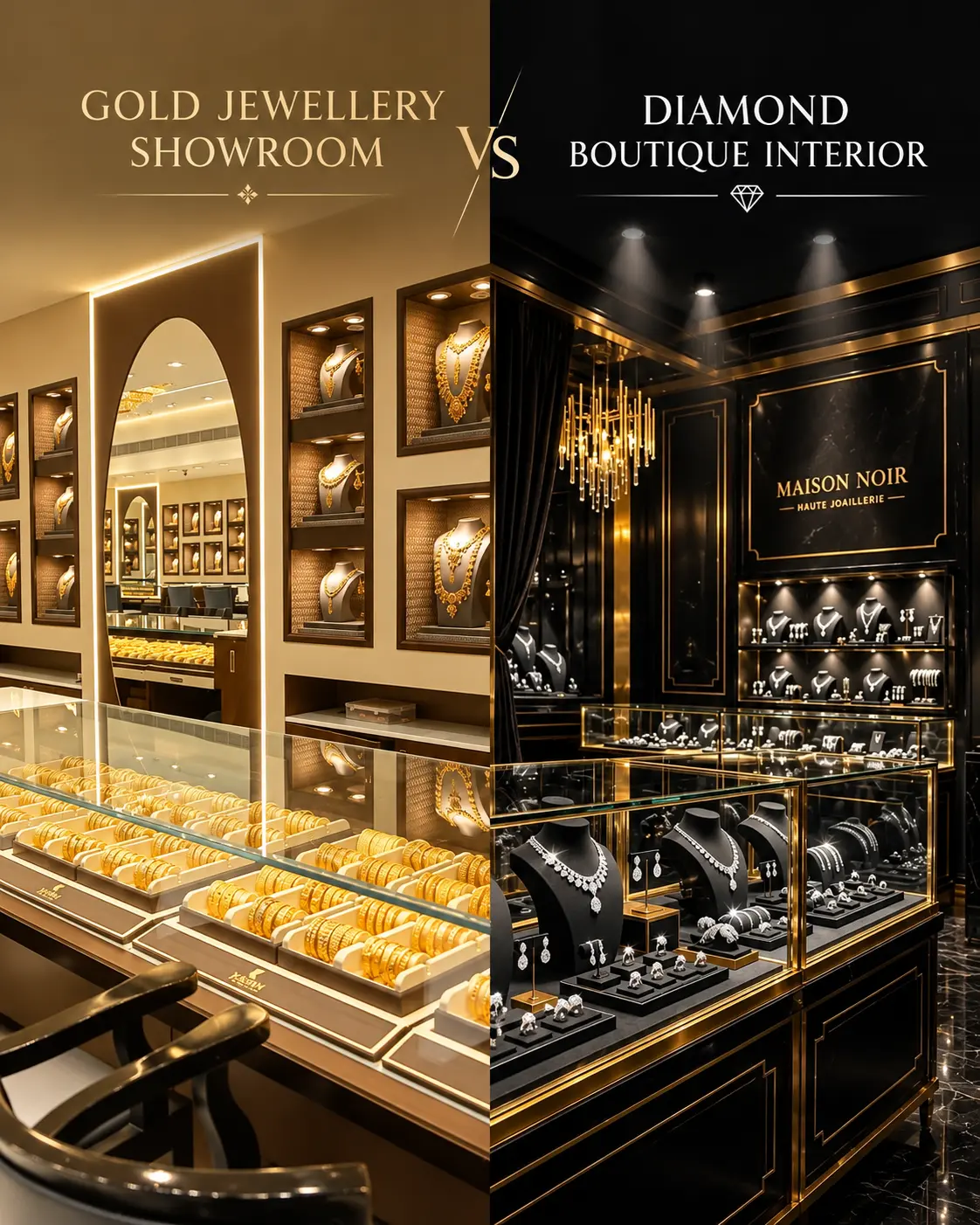
Designing a jewellery retail space requires more than luxurious furniture, attractive display counters, and decorative lighting. A successful jewellery showroom interior design should reflect the brand identity, highlight the jewellery collection, and create a comfortable shopping experience.
Although gold jewellery showrooms and diamond boutiques both operate in the luxury retail market, their interior design requirements differ. Gold showrooms often emphasise tradition, craftsmanship, celebration, and a wide product selection. Diamond boutiques typically focus on exclusivity, precision, elegant displays, and personalised service.
Understanding these differences helps retailers create an interior that complements their products, builds customer confidence, and supports business growth.
Gold Jewellery Showroom vs. Diamond Boutique: Key Interior Design Differences
A gold jewellery showroom typically features warm colours, spacious display counters, traditional design elements, and comfortable seating for families. A diamond boutique generally uses minimalist interiors, controlled lighting, curated product displays, and private consultation areas. Both require secure showcases, effective space planning, and lighting that presents jewellery accurately.
1. Interior Design Philosophy: Tradition vs Contemporary Luxury
Gold jewellery purchases are often associated with weddings, festivals, family celebrations, and cultural traditions. Therefore, a gold jewellery showroom should feel welcoming, spacious, and visually rich.
Designers can incorporate decorative ceilings, elegant wall panels, warm finishes, and subtle metallic accents to create a sense of grandeur. Clearly organised counters allow customers to explore necklaces, bangles, bridal sets, earrings, and everyday jewellery comfortably.
A diamond boutique requires a more refined and intimate atmosphere. Customers may be choosing engagement rings, solitaire diamonds, anniversary gifts, or premium statement pieces. Minimalist furniture, uncluttered showcases, and dedicated consultation spaces encourage customers to focus on individual products.
The essential difference is that gold showroom interiors often celebrate heritage and variety, while diamond boutique interiors emphasise rarity and individual value.
2. Colour Palettes and Material Selection
Colour and material selection influence how jewellery appears against its surroundings. The right finishes enhance the products without distracting customers.
Gold Jewellery Showroom Interiors
Champagne, ivory, beige, maroon, deep brown, and antique gold can create a warm and inviting environment. Wood veneer, natural stone, textured laminates, brushed brass, and upholstered finishes add depth and sophistication.
Burgundy, deep green, or dark brown display inserts can provide contrast against yellow gold, making intricate patterns and craftsmanship easier to appreciate.
Diamond Boutique Interiors
Diamond boutiques generally benefit from restrained colour palettes, including off-white, pale grey, taupe, charcoal, and muted metallic finishes. Polished stone, matte surfaces, glass, and brushed metal can create a contemporary luxury aesthetic.
Neutral display inserts help individual pieces stand out. The objective is to maintain visual balance so that the diamonds remain the centre of attention.
3. Lighting: A Critical Element of Jewellery Showroom Interior Design
Lighting affects jewellery visibility, colour perception, reflections, and the overall shopping atmosphere. Gold and diamonds respond differently to illumination, so lighting should be planned according to the collection.
Lighting for Gold Jewellery Showrooms
Warm-white accent lighting, often around 2700K–3500K, can enhance the richness of yellow gold and create a welcoming ambience.
An effective lighting scheme combines ambient illumination, focused counter lighting, and accent spotlights for bridal and premium collections. High-colour-rendering light sources, preferably CRI 90 or above, can help present jewellery colours more faithfully.
Avoid excessive warmth, uneven illumination, and harsh reflections that make gold appear unnaturally orange.
Lighting for Diamond Boutiques
Diamond boutiques need thoughtfully designed lighting, with the right colour temperature and spotlight angles to showcase each stone while minimising unwanted reflections.Neutral-white lighting around 3500K–4500K can be a starting point, but the final specification should be tested with the actual jewellery and display materials.
Adjustable spotlights, concealed LEDs, and glare-controlled showcases help highlight diamonds without creating distracting reflections. Lighting should enhance the stone’s appearance while allowing customers to examine its details comfortably.
4. Layout and Space Planning
A well-planned jewellery showroom layout improves circulation, product visibility, staff efficiency, and customer comfort.
Gold Showroom Layout
Gold jewellery stores often require greater display capacity because customers may compare several collections during one visit. Useful design elements include:
- An attractive entrance with a featured collection.
- Separate counters for necklaces, bangles, rings, and earrings.
- A dedicated bridal jewellery section.
- Comfortable seating for families.
- Efficient billing and customer-service areas.
Keeping walkways spacious and unobstructed is essential during wedding seasons and festivals, when jewellery showrooms often experience a surge in customer visits.
Diamond Boutique Layout
A diamond boutique usually benefits from a more curated arrangement. Individual showcases, a welcoming reception, comfortable consultation seating, and discreet discussion areas create a more personalised experience.
The layout should allow customers to examine premium jewellery, discuss budgets, and understand product specifications without unnecessary distractions.
5. Display Counters and Visual Merchandising
Display counters should complement the jewellery collection rather than compete with it.
Gold showrooms can use larger showcases, category-based arrangements, tiered displays, and velvet trays to present multiple designs. Carefully selected display inserts help enhance contrast while maintaining an elegant appearance.
Diamond boutiques generally benefit from clean-lined counters, individual display platforms, neutral inserts, and integrated lighting. Low-iron glass can reduce the greenish tint associated with ordinary glass, while suitable anti-reflective treatments can improve visibility.
In both settings, counters should provide comfortable viewing heights, sufficient working space, and secure storage. Effective visual merchandising makes jewellery easier to compare and appreciate.
6. Privacy, Security, and Customer Trust
Security is essential when designing any jewellery retail space. Protective measures should be integrated into the original layout rather than added after construction.
Gold showrooms need clear sightlines, secure storage, controlled access, and discreet surveillance to support open browsing and staff supervision.
Diamond boutiques may also require semi-private consultation areas, secure display cabinets, discreet payment spaces, and carefully planned staff access.
The objective is to balance customer comfort, product visibility, and security without compromising the overall design.
7. Branding and Customer Experience
A jewellery showroom’s interior communicates its brand identity before a customer interacts with the sales team.
Gold showrooms can express craftsmanship, heritage, and celebration through architectural details, coordinated finishes, and collection storytelling. Digital catalogues and bridal collection displays can support product discovery.
Diamond boutiques can communicate precision and exclusivity through restrained signage, refined furniture, and carefully presented product information. Interactive displays can explain diamond characteristics such as cut, colour, clarity, and carat weight.
In both formats, a successful customer experience combines attractive interiors with knowledgeable service and transparent product information.
Common Jewellery Showroom Interior Design Mistakes to Avoid
Avoid these common mistakes when planning a jewellery retail space:
- Using identical lighting everywhere: Different jewellery collections may require different lighting arrangements.
- Overcrowding showcases: Excessive merchandise can make premium products harder to appreciate.
- Ignoring glare: Reflective flooring and poorly positioned spotlights can reduce visibility.
- Prioritising decoration over functionality: Narrow aisles and uncomfortable seating affect the shopping experience.
- Overlooking acoustics: Hard surfaces can increase noise, while suitable acoustic treatments may improve comfort.
- Adding security too late: Storage, surveillance, and access controls should be considered during initial planning.
Can One Jewellery Showroom Combine Gold and Diamond Collections?
Yes. A single showroom can display gold and diamond jewellery effectively by creating distinct zones within a consistent brand identity.
The gold section can feature warmer finishes, richer colours, and broader product displays. The diamond section can use neutral colours, carefully controlled lighting, and more intimate consultation areas.
Coordinated materials, consistent signage, and thoughtful transitions between zones help the showroom feel cohesive while giving each collection its own identity.
Transform Your Jewellery Showroom with Shayon Home Creation
Successful jewellery showroom interior design combines visual appeal, practical space planning, appropriate lighting, secure displays, and a consistent brand identity. Gold showrooms often benefit from welcoming interiors and generous display capacity, while diamond boutiques call for curated showcases and a more personalised atmosphere.
At Shayon Home Creation, we develop commercial interior design solutions that balance aesthetics, functionality, and customer experience. Our approach focuses on thoughtful layouts, material selection, lighting, and display planning to create retail spaces that reflect each brand’s identity.
If you are planning a new jewellery showroom or renovating an existing retail space, connect with Shayon Home Creation to discuss your requirements. We provide interior design solutions in Coimbatore and can help you plan a jewellery showroom that combines elegance, functionality, and a memorable customer experience.
Frequently Asked Questions
What is the best interior design for a gold jewellery showroom?
The best design combines warm lighting, elegant finishes, organised display counters, comfortable seating, clear circulation, and secure storage. The layout should reflect the brand identity while allowing customers to compare collections comfortably.
How should a diamond jewellery boutique be designed?
A diamond boutique should prioritise minimalist interiors, carefully controlled lighting, uncluttered showcases, refined materials, and personalised consultation spaces. Security and glare control should be integrated into the design.
What lighting is suitable for jewellery showroom interiors?
Warm-white accent lighting can complement yellow gold, while carefully controlled neutral-white lighting can work well for diamond displays. The final lighting specification should be tested with the actual jewellery, display inserts, and surrounding finishes.
What materials are best for jewellery display counters?
Suitable materials include stone surfaces, quality laminates, wood veneer, glass, brushed metal, and upholstered display inserts. The selection should balance appearance, durability, maintenance, visibility, and security requirements.
How can an interior designer improve jewellery showroom security?
An interior designer can integrate secure showcases, controlled access, discreet surveillance provisions, lockable storage, and clear staff sightlines into the initial layout. Security planning should complement the customer experience and the showroom’s appearance.
